Keychron K2 V2 (75% Wireless Mechanical)
Editor's Choice — a 75% wireless mechanical that treats both productivity and gaming as first-class use cases.
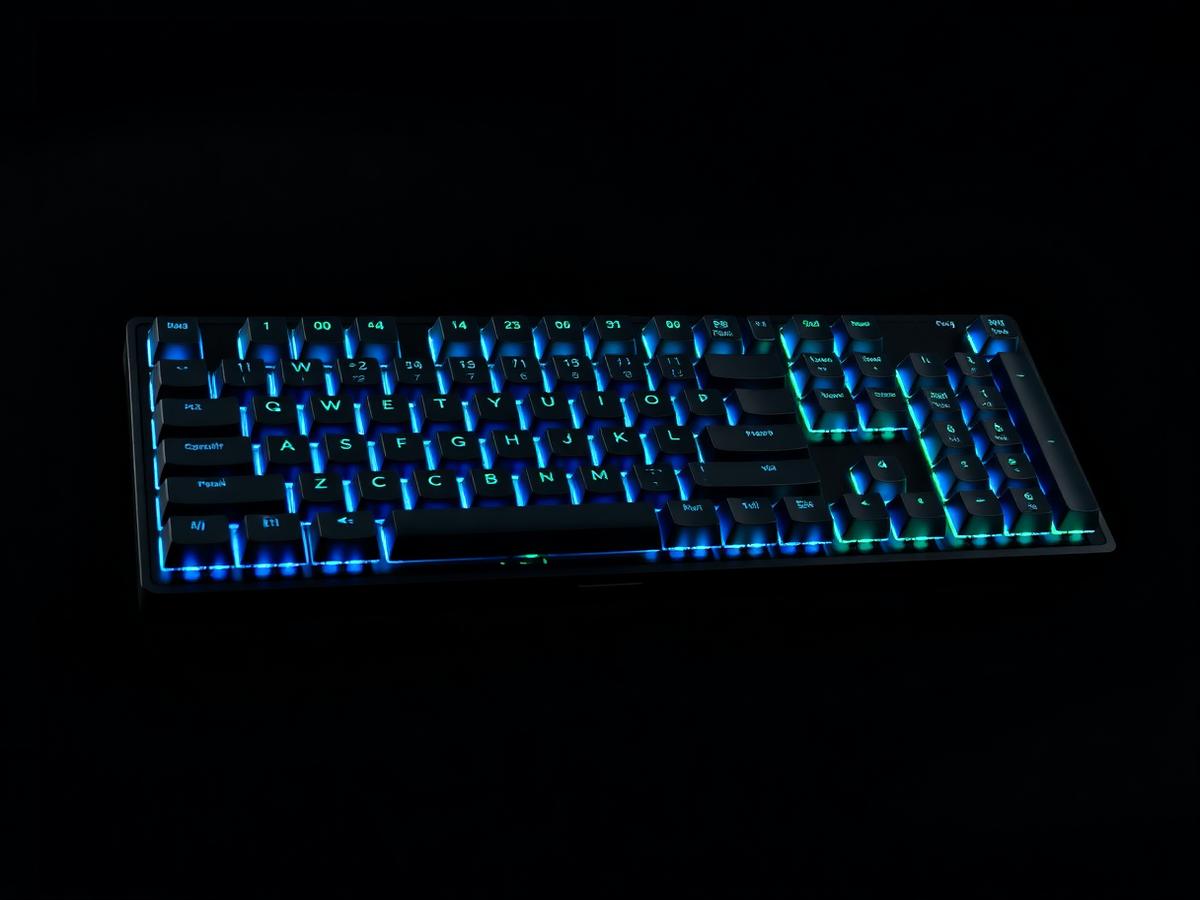
The K2 V2 is still the most complete sub-$100 mechanical keyboard: a 75% layout that keeps arrow keys and a function row, genuine Gateron mechanical switches in three flavours (Red/Brown/Blue), Bluetooth 5.1 with a wired USB-C fallback, and a native Mac + Windows key set. Nothing else at this price checks every one of those boxes.
The K2 V2 uses Gateron mechanical switches — the same Chinese-made Cherry MX-compatible switches used by many boutique keyboards two to three times this price. The Brown variant we recommend for mixed typing/gaming has a tactile bump at 2 mm actuation and total travel of 4 mm, published on Gateron's own datasheet. Red (linear) is the quieter pick for shared spaces; Blue (clicky) is louder than most housemates will tolerate.
Wireless implementation is the K2 V2's quiet win. Bluetooth 5.1 pairs to up to three devices, and switching between them is a single-key combo — genuinely useful if you rotate between a work laptop, a personal Mac and a gaming PC. Independent reviewers from RTINGS and Tom's Hardware note that latency over Bluetooth is measurable but not disqualifying for anything short of ranked competitive play; for that use the included USB-C cable.
Build quality is above the class average — the top frame is aluminium on the standard variant, keycaps are ABS with shine-through legends, and Keychron sells replacement keycap sets and switches directly. That gives the K2 V2 a genuine upgrade path most $80 keyboards lack.
Pros
- 75% layout keeps arrow keys and function row without the numpad footprint
- Genuine Gateron mechanical switches (Red / Brown / Blue)
- Bluetooth 5.1 to three devices + USB-C wired fallback
- Native Mac and Windows key sets in the box
Cons
- ABS keycaps rather than PBT at this price
- No dedicated software — remapping requires third-party tools on Windows
- Non-hot-swap on the standard variant (hot-swap version costs more)
You want a single keyboard that handles daily typing, coding and mid-tier gaming across both a laptop (via Bluetooth) and a desktop (via USB-C), and you don't need dedicated numpad keys.
You need per-key programmable RGB or macro software at a peripheral-brand level (see the HyperX Alloy Origins Core), or you play competitive shooters at sub-1 ms latency (wired-only, see the Razer Huntsman Mini).