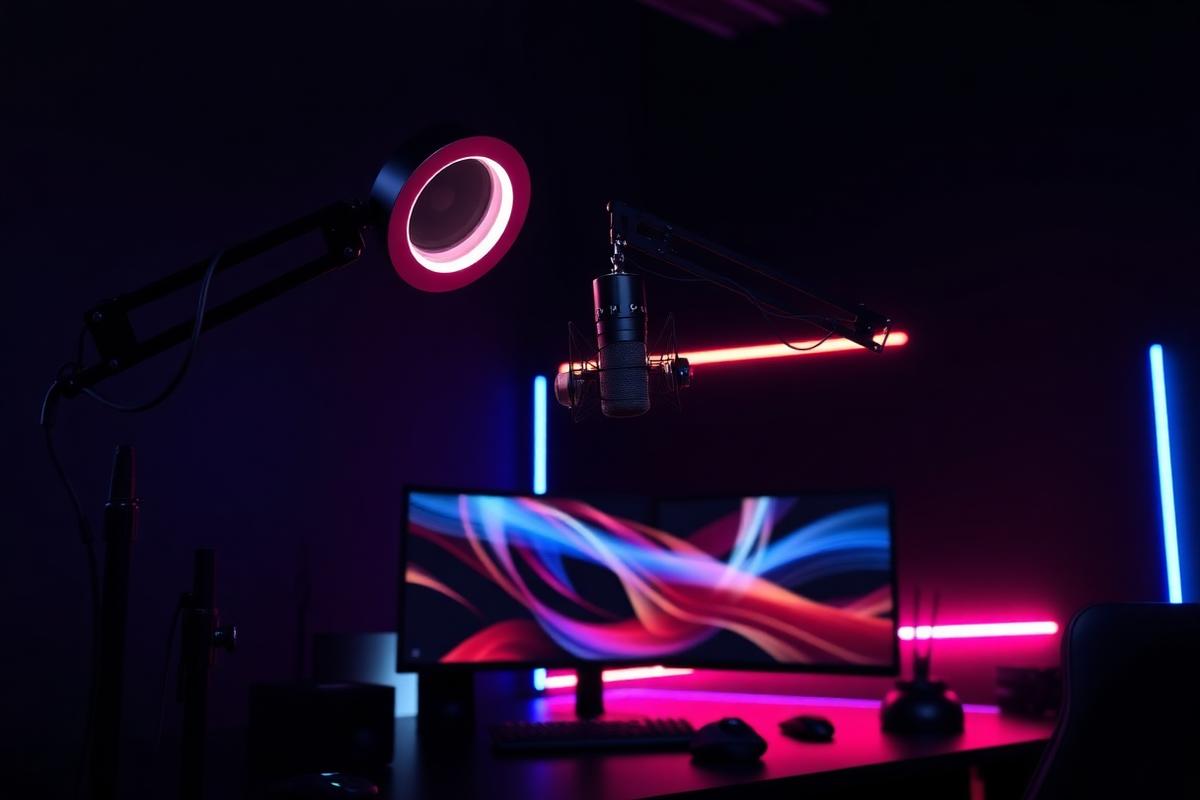
Shure SM7B
Editor's Choice — the broadcast-standard cardioid dynamic used across podcasting, streaming and radio.
The SM7B has been the default professional voice microphone for over two decades because it does the two things a streaming mic needs to do better than almost anything else: it flatters the human voice, and it rejects the room around you. It is XLR only, and it needs a real preamp — factor that into the total cost.
The SM7B is a cardioid dynamic with a published frequency response of 50 Hz–20 kHz, a bass roll-off switch and a presence boost switch on the rear. Its cardioid pattern is unusually tight for a dynamic mic, which is the single biggest reason it sounds clean in rooms that would ruin a condenser: keyboard clatter, PC fans and reflections from hard walls sit meaningfully lower than the voice.
The trade-off is gain. The SM7B is a low-output dynamic and demands roughly 60 dB of clean preamp gain to sit at a healthy level. Cheaper USB interfaces run out of headroom before that; almost every serious SM7B chain adds an inline preamp such as a Cloudlifter CL-1 or FetHead, or a modern interface with dedicated broadcast gain (Focusrite Scarlett 4th gen, RØDECaster, GoXLR Mini). Budget for that upfront.
Independent reviews at Sound on Sound, Podcastage and B&H consistently rate the SM7B at the top of the broadcast dynamic category. Shure ships it with an integrated foam windscreen, a detachable close-talk windscreen and a yoke-style mount for a boom arm. Two-year US warranty applies. Verified owners consistently describe it as a lifetime purchase.
Pros
- Category-defining voice tone with a flattering low-mid presence
- Excellent room rejection for an untreated home setup
- Onboard bass roll-off and presence boost switches
- Effectively a lifetime purchase — build survives daily use for decades
Cons
- XLR only — no USB option
- Low output demands ~60 dB of clean preamp gain (often an inline booster)
- The heaviest total-cost pick in this guide once you add an interface and boom arm
You are serious about streaming or podcasting, record in a normal untreated room, and are ready to invest in a proper audio chain (interface + preamp gain) that will outlast several microphones.
You want to plug a mic into a USB port and be done. The SM7B needs an XLR interface with 60+ dB of clean gain, and often an inline preamp such as a Cloudlifter or FetHead to sit comfortably.